Freelancer vs. Agency for Your Small Business Website: The Honest Comparison

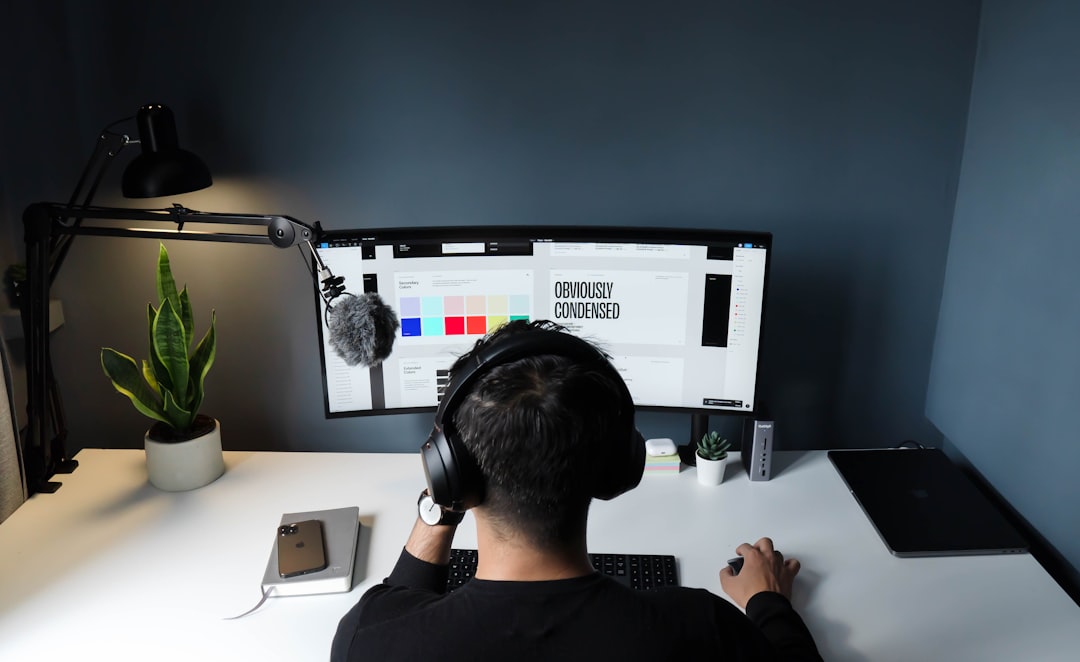
Full disclosure before we start: I am a freelancer. I am Jerry the Creative Guy, and I build websites for small businesses and trades across Ontario. So yes, I have a horse in this race.
That is exactly why this comparison needs to be honest. If I told you a freelancer is the right choice for everyone, you would smell the sales pitch a paragraph in, and you would be right to. Agencies genuinely win in some situations. Freelancers win in others. The goal here is to help you figure out which situation is yours.
Let's break it down properly.
What You Are Actually Comparing
First, let's clear away a common misconception. This is not a comparison of talent. There are brilliant freelancers and brilliant agencies, and there are terrible versions of both. What you are comparing is a business model, and the business model shapes everything: price, communication, speed, and where your money goes.
An agency is a company. It has account managers, project coordinators, designers, developers, salespeople, and an office. Every invoice you pay funds all of it.
A freelancer is a person. The one who answers your email is the one who designs your homepage, writes your code, and fixes the thing you noticed on Tuesday night.
Neither model is wrong. But they produce very different experiences, especially at small business scale.
Price: Where the Money Goes
Agency: A small business website from a reputable Ontario agency typically runs $10,000 to $20,000, often with a monthly retainer attached. That is not price gouging. It is arithmetic. When five people touch your project and each bills their time, plus overhead, plus margin, the number climbs fast.
Freelancer: The same scope of site from an experienced freelancer typically runs $2,000 to $8,000. Not because the work is worth less, but because you are paying one person for the hours worked, not an organizational chart.
Here is the part most comparisons skip: the percentage of your budget that reaches the actual work. With a freelancer, nearly all of it does. With an agency, a meaningful slice funds meetings about your project rather than your project.
Honest advantage: Freelancer, at small business budgets. If your budget is $25,000+, the math changes and agency overhead buys you real capacity.
Communication: The Telephone Game Problem
Agency: You talk to an account manager. The account manager writes a brief. The brief goes to a designer you may never meet. The designer's work goes back through the account manager to you. Every layer is a chance for "make the phone number impossible to miss" to become something vaguer by the time it reaches the person holding the mouse.
Freelancer: You talk to the person doing the work. When you say "my customers are mostly older homeowners who browse on their phones," I am the one who takes that straight into the design. No translation, no telephone game, no waiting two days for a reply to route through three inboxes.
This matters more than people think. Small business websites live or die on details: the right words on the quote button, the phone number placed where a thumb lands, the service photos that build trust. Details survive direct conversations. They die in handoffs.
Honest advantage: Freelancer, and it is not close.
Speed and Flexibility
Agency: Your project enters a queue alongside every other client. Timelines run eight to sixteen weeks for a small business site, and change requests go through a formal process, sometimes with change-order fees.
Freelancer: A good freelancer runs a lighter schedule and can typically deliver a small business site in three to six weeks. Mid-project pivots ("we just added drain camera inspections, can we get a page for that?") are a conversation, not a contract amendment.
Honest advantage: Freelancer for speed. But note the caveat below under risk.
Range of Services
Agency: This is where agencies earn their keep. Need a website plus a Google Ads campaign plus video production plus a PR push plus ongoing social management? An agency has specialists for each, coordinated under one roof. No freelancer honestly covers all of that at a high level.
Freelancer: A specialized freelancer goes deep rather than wide. In my case that means design, development, local SEO, Google Business Profile, and review tools for trades and home-services businesses. Deep in a niche beats shallow across everything for most small businesses, but if you need a full multi-channel marketing department, one person cannot be one.
Honest advantage: Agency, if you need the full menu. Freelancer, if you need the website done exceptionally well.
Risk: The Bus Factor
Time for the argument agencies make against freelancers, because it is a fair one.
The agency case: If your freelancer gets sick, retires, or disappears, you are stranded. An agency has a team; no single person leaving sinks your project. This is real, and you should take it seriously.
How to protect yourself with a freelancer: Insist on owning everything: your domain, your hosting account, your site files, your content. A professionally built site on standard technology can be picked up by any competent developer. The freelancers to avoid are the ones who lock you into proprietary platforms or hold your domain hostage. Ask directly: "If you got hit by a bus tomorrow, what happens to my site?" A good freelancer has a clear answer. I make sure my clients own every piece of their web presence, precisely because that question deserves a real answer.
The flip side agencies mention less: Agencies have their own version of this risk. Staff turnover means the designer who built your site may be gone within a year, and your "team" is really whoever is assigned to you this quarter. Agencies also fold, get acquired, and drop smaller accounts when bigger fish arrive.
Honest advantage: Agency, narrowly, but good ownership practices close most of the gap.
Accountability and Care
Here is something the comparison charts never capture. To an agency, a $4,000 small business website is a small account. You will not get their senior people, and you will not be the client they think about in the shower.
To a freelancer who specializes in businesses like yours, you are the whole business. My reputation in Kitchener-Waterloo is built one plumber, one contractor, one small shop at a time. If your website does not bring you customers, that follows me around town. That is a different kind of accountability than a quarterly report.
And frankly, this is the part I love. I got into this work because I love design, and I stayed in it because there is nothing like watching a small business go from an outdated site nobody found to a steady stream of quote requests. Turning clicks into actual clients is the whole job. When it is one person's name on the work, that outcome is personal.
Honest advantage: Freelancer, at small business scale.
So Which Should You Choose?
Choose an agency if:
Your budget is $20,000+ and includes ongoing multi-channel marketing. You need coordinated specialists: ads, video, PR, social, content. You are a larger operation that values process and documentation over speed. Corporate procurement requires working with an incorporated firm of a certain size.
Choose a freelancer if:
Your budget is $2,000 to $8,000 and you want it going into the work. You want to talk directly to the person building your site. You value speed and the ability to adjust without paperwork. You want someone who specializes in businesses like yours. You want a long-term relationship with a person, not an account number.
For most small businesses and trades, the freelancer column describes your situation. Not because freelancers are better people, but because the freelance model fits your scale. You get senior-level work, direct communication, and a fair price, and you skip paying for an org chart you do not need.
One Last Piece of Advice
Whichever way you go, judge the option in front of you, not the category. Ask to see live sites for businesses like yours. Click through them on your phone. Ask what happens if you part ways. Ask who, specifically, will do the work.
A great freelancer beats a mediocre agency every time, and a great agency beats a mediocre freelancer just as surely. The category tells you about price and process. The portfolio tells you about results.
Frequently asked questions
Is it cheaper to hire a freelancer or an agency for a website?
Are agency websites better quality than freelancer websites?
What happens if my freelancer disappears or retires?
How long does a freelancer take to build a small business website?
When should a small business choose an agency instead of a freelancer?
Do freelance web designers offer ongoing support?
Need a website that actually brings in work?
I build fast, modern sites for trades and local businesses across Kitchener-Waterloo.
Get in touch