A Newcomer's Guide to Waterloo Region: Kitchener vs. Waterloo vs. Cambridge

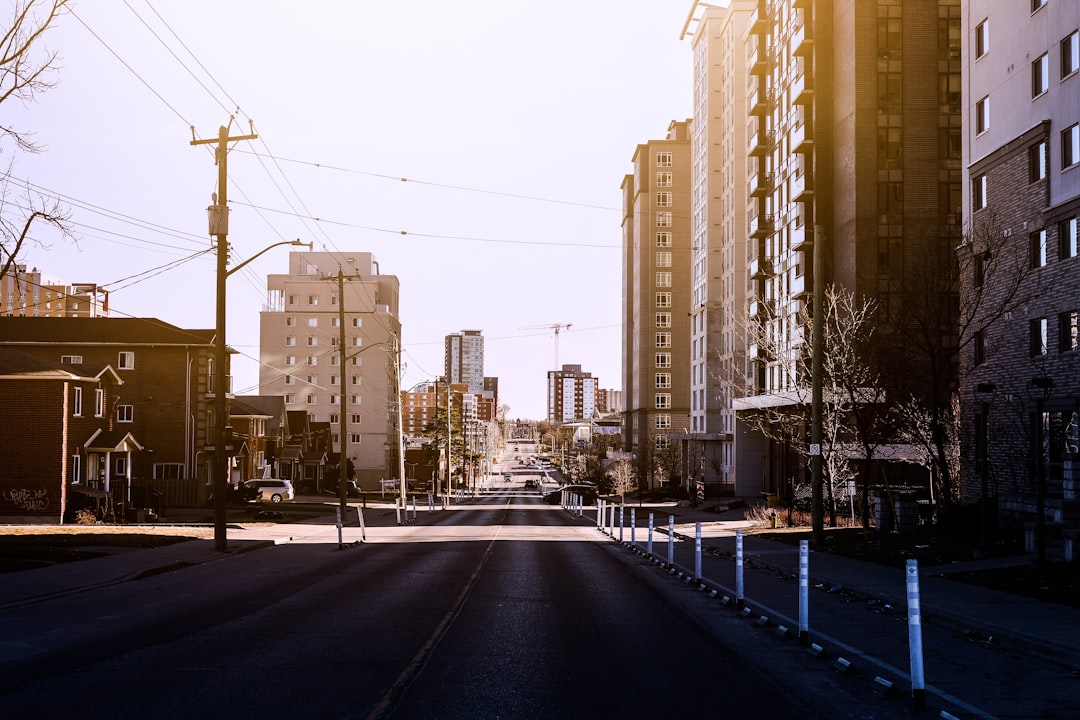
I have lived and worked here for years, so consider this the orientation session nobody gives you when you arrive. Here is how the region fits together, what each city is like, and how to figure out which one fits you.
First, Understand the Structure
Waterloo Region (officially the Regional Municipality of Waterloo) is a two-tier municipality. The Region handles the big shared services: police, waste collection, transit, water, and regional roads. Underneath it sit seven local municipalities:
Three cities: Kitchener, Waterloo, and Cambridge
Four townships: Woolwich, Wilmot, Wellesley, and North Dumfries
Roughly 660,000 people call the region home, making it the tenth-largest metropolitan area in Canada. Kitchener and Waterloo blend together so completely that locals just say "KW." You can cross from one to the other mid-block on King Street and never know it. Cambridge sits about fifteen minutes south, separated by farmland and Highway 401, and it very much considers itself its own place.
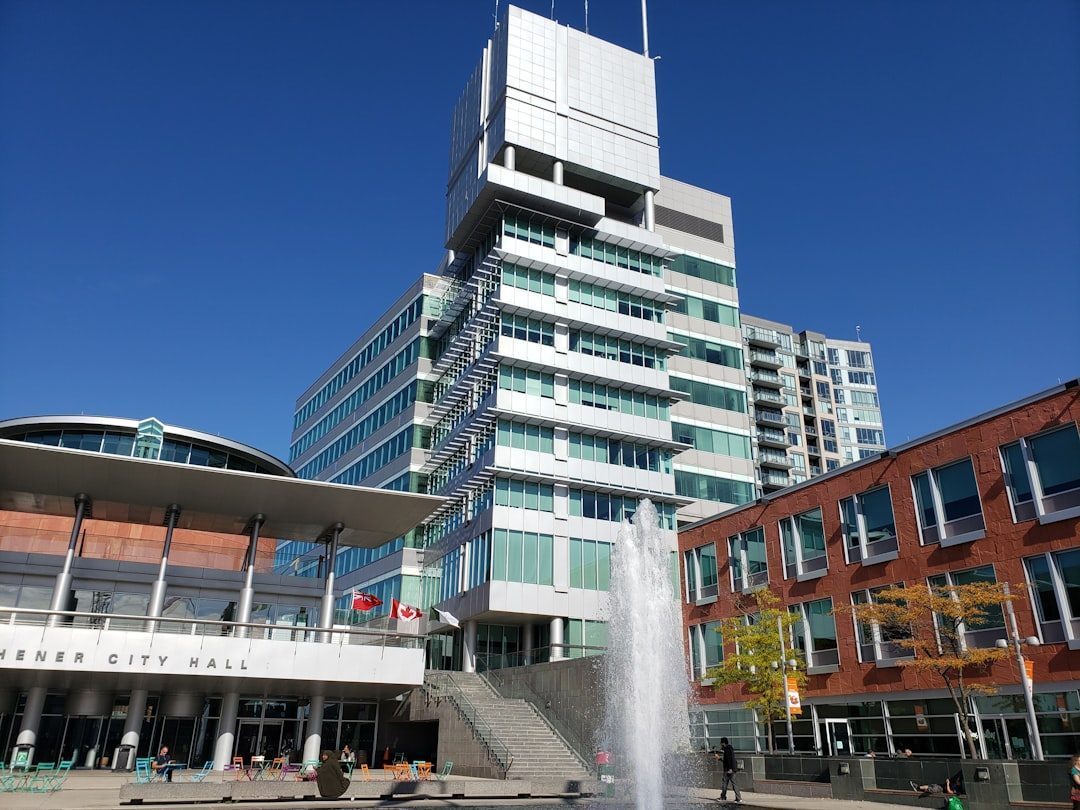
One quirk to absorb early: your garbage, your buses, and your police are regional, but your parks, your fire department, and your property tax rate depend on which city you picked. Two neighbours on opposite sides of a municipal boundary can pay noticeably different taxes for similar houses.
The Quick Comparison
| Kitchener | Waterloo | Cambridge | |
|---|---|---|---|
| Population | ~290,000 | ~130,000 | ~150,000 |
| Personality | The big city of the three, working-class roots, rapidly changing downtown | University and tech town, polished and younger | Historic river town, independent streak |
| Housing | Widest range, most options | Priciest on average, heavy student rental market near campuses | Often the best value for heritage character |
| Transit | ION light rail runs through it | ION light rail runs through it | Express bus connection, LRT extension planned |
| Best for | First-time buyers, families wanting options, downtown living | Students, tech workers, walkable urban life | Commuters, heritage home lovers, small-town feel |
Kitchener: The Heavyweight
Kitchener is the largest of the three cities and the seat of regional government. Its roots are German and industrial. The city was called Berlin until 1916, and that heritage still shows up everywhere, most loudly every October when Kitchener-Waterloo hosts the largest Oktoberfest outside Germany.
The feel: Kitchener is the most varied of the three. Downtown has transformed over the past decade from tired to genuinely interesting, anchored by the Google office, the Communitech startup hub, converted factories full of tech companies, and a growing restaurant scene along King Street. Ride ten minutes out and you hit century-home neighbourhoods, post-war suburbs, and brand-new subdivisions in the south end, all in the same city.
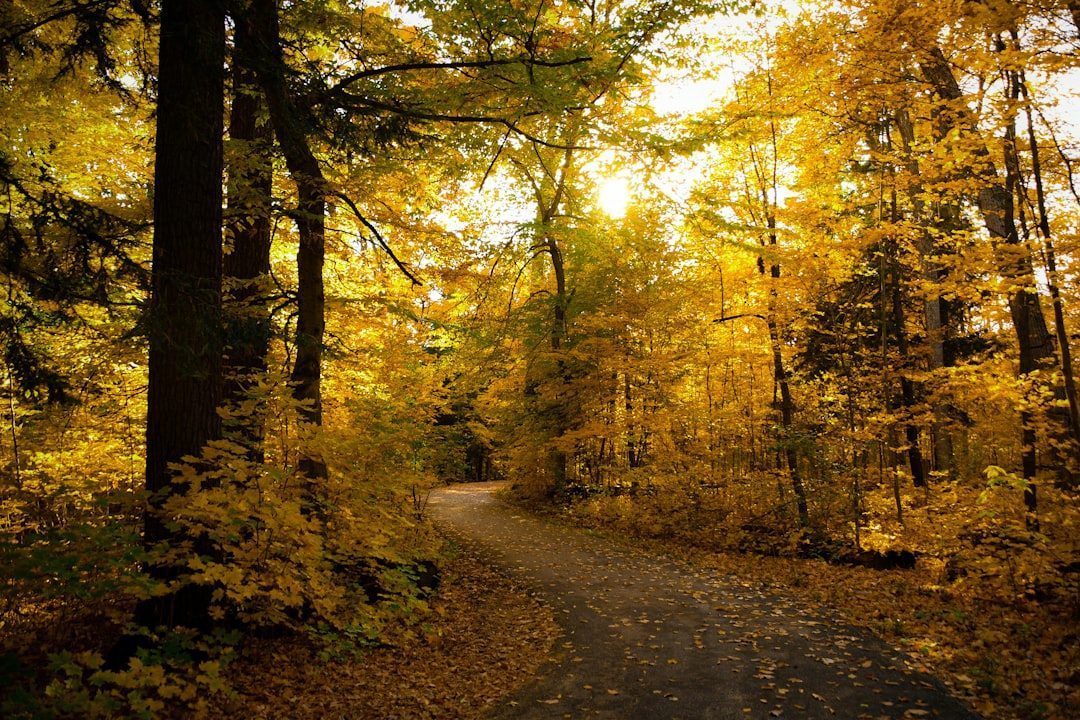
Neighbourhoods to know: Victoria Park and the Civic Centre area for century homes near downtown. Stanley Park and Forest Heights for established family streets. Doon South and Huron Park for newer builds. Bridgeport along the Grand River for a village feel inside the city.
Who it suits: Almost everyone, which is its selling point. Kitchener gives you the most housing choice at the most price points, plus the ION light rail running straight through it. If you cannot decide, you probably want Kitchener.
The honest downsides: Downtown is still mid-transformation, so blocks vary. Some older neighbourhoods come with older-home realities: knob-and-tube wiring, galvanized plumbing, and basements that need attention (more on water later).
Waterloo: The Brain
Waterloo is the smallest of the three cities and punches absurdly above its weight. It is home to the University of Waterloo, Wilfrid Laurier University, and the tech legacy that gave the world BlackBerry. The region's reputation as "Canada's Silicon Valley" was earned mostly on Waterloo soil.
The feel: Younger, denser, and more polished. Uptown Waterloo (never call it downtown; the locals will correct you) is the region's most walkable core, with the Waterloo Public Square, restaurants, and independent shops. Two universities mean tens of thousands of students, which brings energy, cheap eats, and a rental market unlike anywhere else in the region.
Neighbourhoods to know: Uptown and the Mary-Allen neighbourhood for walkability and character homes. Laurelwood and Clair Hills for newer family suburbs near excellent schools. Beechwood for established leafy streets. The Northdale area between the universities is dense student housing; know that going in.
Who it suits: Tech workers, academics, students, and anyone who wants to walk to coffee. Waterloo consistently ranks among the safest and most educated cities in Canada.
The honest downsides: You pay for the polish. Waterloo carries the highest average home prices of the three cities, and the student population means some neighbourhoods turn over every September and empty out every May. If you buy near the universities, research the street, not just the house.
Cambridge: The Character
Cambridge is the newest city with the oldest bones. It was created in 1973 by amalgamating three distinct communities, Galt, Preston, and Hespeler, plus the village of Blair, and fifty years later many residents still identify with their original town first and Cambridge second. Ask someone from Hespeler where they live and you will hear "Hespeler."
The feel: Cambridge is built along rivers, and it shows. Downtown Galt's limestone architecture along the Grand River is the most beautiful streetscape in the region, full stop. It stands in for European cities in film and television productions regularly. Preston and Hespeler each have their own small cores, giving Cambridge a multi-village character the other cities lack.
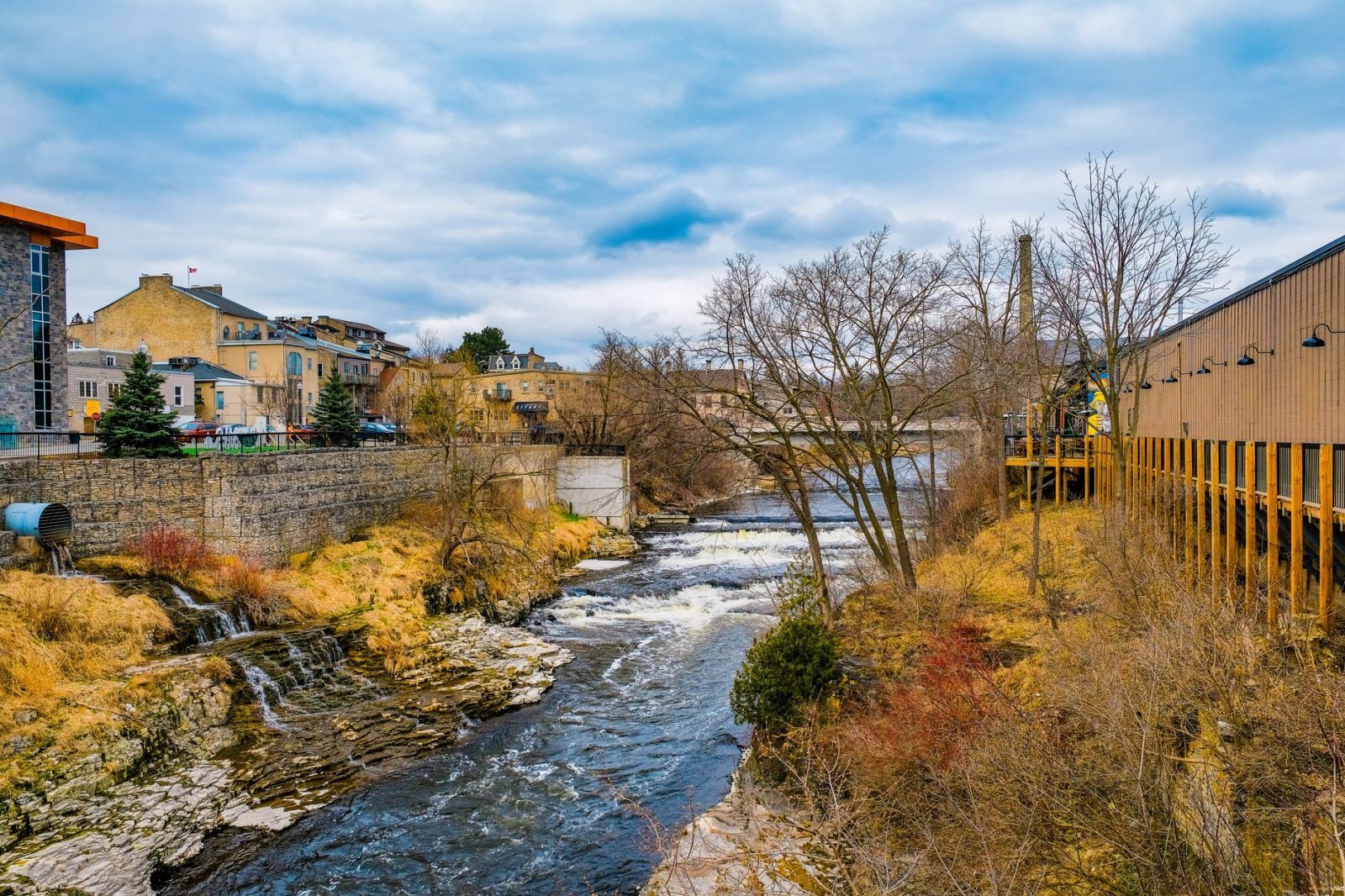
Neighbourhoods to know: West Galt for the region's grandest heritage homes. East Galt for more affordable century houses. Preston for a central location between the 401 and the other cores. Hespeler for small-town feel with quick highway access. River Mill and the newer east-side developments for modern builds.
Who it suits: Commuters, first. Cambridge sits directly on Highway 401, making it the logical choice if you work in Guelph, Milton, or the GTA. It also suits anyone who fell in love with a limestone Victorian, because your dollar goes further here for heritage character than anywhere else in the region.
The honest downsides: Cambridge is the one city the ION light rail does not reach yet. The connection is currently an express bus, with the LRT extension planned but years away. Cambridge can also feel separate from the KW core, because it is; that fifteen-minute gap matters for daily life, and you will pick a side of it.
Don't Sleep on the Townships
The four townships surrounding the cities hold some of the region's best-known places:
Woolwich includes St. Jacobs, home to the famous farmers' market (one of Canada's largest), and Elmira, which hosts the world's largest single-day maple syrup festival every spring. This is also the heart of the region's Old Order Mennonite community; sharing the road with horse-drawn buggies is a normal part of driving here.
Wilmot includes New Hamburg and Baden, with small-town main streets twenty minutes from Kitchener.
Wellesley is quiet farm country with a strong Mennonite presence and the annual Apple Butter and Cheese Festival.
North Dumfries centres on the village of Ayr, popular with buyers wanting land and quick 401 access.
Township living means larger lots and lower prices, traded against longer drives and, in many areas, well water and septic systems.
What Housing Costs (Mid-2026 Snapshot)
Numbers move, so treat these as a snapshot rather than gospel. As of spring 2026, the benchmark home price sits around $649,000 in Kitchener-Waterloo and $676,000 in Cambridge, with the region-wide average sale price around $744,000 across all property types. Detached homes average in the $850,000 range, townhouses in the high $500,000s, and condos around $400,000. A one-bedroom apartment rents for roughly $1,750 a month, meaningfully cheaper than Toronto.
The pattern within the region: Waterloo tends to run priciest per square foot, Kitchener offers the widest spread, and Cambridge frequently delivers the most house for the money, especially in heritage stock.
Getting Around
ION light rail runs from Conestoga Mall in north Waterloo through Uptown, downtown Kitchener, and south to Fairview Park Mall, with an express bus continuing to Cambridge. If you live and work along the corridor, you can genuinely skip a car for the daily commute.
Grand River Transit covers the rest with buses across all three cities.
GO Transit connects Kitchener to Toronto by train from the downtown Kitchener station, with service expanding toward two-way all-day trains. The drive to Toronto runs about an hour and fifteen minutes without traffic, which is a sentence that has never once described Highway 401 in real life.
Highways: The 401 runs through Cambridge. Highway 8 and the Conestoga Parkway (Highway 85) tie the three cities together. Rush hour exists but will make anyone arriving from the GTA laugh with relief.
Things Every Newcomer Learns the Hard Way
The water is hard. Very hard. About three quarters of the region's water comes from groundwater wells drilled through limestone, and the result is some of the hardest municipal water in Canada, averaging around 400 ppm when much of Ontario sits far lower. A water softener is standard equipment in homes here, not a luxury. Budget for one, and if your new home has one, learn to keep it fed with salt.
Spring melt matters. The Grand River and its tributaries run through the region, and the Grand River Conservation Authority actively manages flooding with dams, dikes, and seasonal flood warnings. Low-lying areas near the rivers, and older homes generally, benefit from sump pumps and backwater valves. If you are house-hunting near water, ask about flood history.
Winter is real. Expect snow from roughly late November through March, freeze-thaw cycles that produce both potholes and ice, and the occasional storm that shuts the schools. On the bright side, the region grooms trails, floods outdoor rinks, and generally embraces the season.
Oktoberfest is a civic holiday in spirit. Nine days every October. Plan accordingly.
The market runs on Saturdays. St. Jacobs Farmers' Market is the weekend institution. Go early, bring cash for the Mennonite vendors, and get the apple fritters.
Tech shapes the economy but does not define everyone. The universities, Google, Communitech, and a deep startup scene anchor the white-collar side, while advanced manufacturing (including the Toyota plant in Cambridge) anchors the other. It is a working region, not just a campus.
So Which One Should You Choose?
Choose Kitchener if you want the most options: the widest housing range, the LRT, a downtown on the rise, and neighbourhoods at every price point.
Choose Waterloo if you want walkable urban life, work in tech or academia, and are willing to pay a premium for polish and proximity.
Choose Cambridge if you commute on the 401, love heritage architecture, or want the strongest small-town identity within a city.
Choose a township if you want land, quiet, and a main-street pace, and do not mind driving for everything else.
The good news is that you cannot get it badly wrong. The three cities are fifteen minutes apart. Wherever you land, the whole region is yours: the market on Saturday, Oktoberfest in the fall, the Grand River trails all year, and neighbours who will absolutely tell you whether you live in Galt, Preston, or Hespeler.
Welcome to Waterloo Region.
Frequently asked questions
Is it cheaper to live in Kitchener, Waterloo, or Cambridge?
What is the difference between Kitchener and Waterloo?
Is Waterloo Region a good place to live?
How far is Waterloo Region from Toronto?
Does Waterloo Region really have hard water?
Which city in Waterloo Region is best for families?
Is Cambridge part of Kitchener-Waterloo?
Need a website that actually brings in work?
I build fast, modern sites for trades and local businesses across Kitchener-Waterloo.
Get in touch